Boston Local Food Festival 2026: What to Know Before You Go
Boston Local Food Festival returns to the Rose Kennedy Greenway on Sunday, September 20, 2026. Here’s what’s confirmed now, plus practical tips on getting there, timing your visit, and navigating one of downtown Boston’s biggest food events.
The Boston Local Food Festival is set for Sunday, September 20, 2026, on the Rose Kennedy Greenway, with festival hours listed as 11 a.m. to 5 p.m.. A rain date of Sunday, September 27 is also posted by the organizer. If you are planning your September food calendar in Boston, this is the current-year date to use.
The event is one of downtown Boston’s bigger food-focused public gatherings, and it is especially useful for locals who want a broad snapshot of New England producers, prepared foods, and food culture in one walkable setting. The organizer says the 2026 festival will feature nearly 100 local-only food vendors, family activities, cooking demonstrations, and a seafood cooking competition.
What is confirmed for 2026
As of this 2026 guide, the officially posted details are straightforward: Boston Local Food Festival will take place on the Rose Kennedy Greenway on Sunday, September 20, from 11 a.m. to 5 p.m., with September 27 held as the rain date.
The organizer places the festival along the Greenway between the Greenway Carousel and High Street, running parallel to John Fitzgerald Surface Road and Atlantic Avenue. That matters because this is not a single fenced park lawn; it is a linear downtown event footprint stretching through the Waterfront and Downtown edge of the city.
Programming that has been specifically posted for 2026 includes cooking demonstrations scheduled hourly from 11 a.m. through 4 p.m., a Seafood Throwdown scheduled from 12:30 to 2:30 p.m., a Family Fun Zone open during festival hours, and a New England Village area. The organizer also says the event aims to be zero-waste, with compostable serviceware required from vendors.
Vendor spots are already listed as sold out for 2026, which is a useful signal that the event is fully in motion even if some attendee-facing details continue to fill in closer to September.
How big it is, and how to approach it
This is best treated as a strolling festival, not a quick stop. The organizer describes the footprint as roughly a half-mile along the Greenway, with nearly 100 vendors spread across multiple zones. Expect to walk, browse, and double back rather than stand in one place.
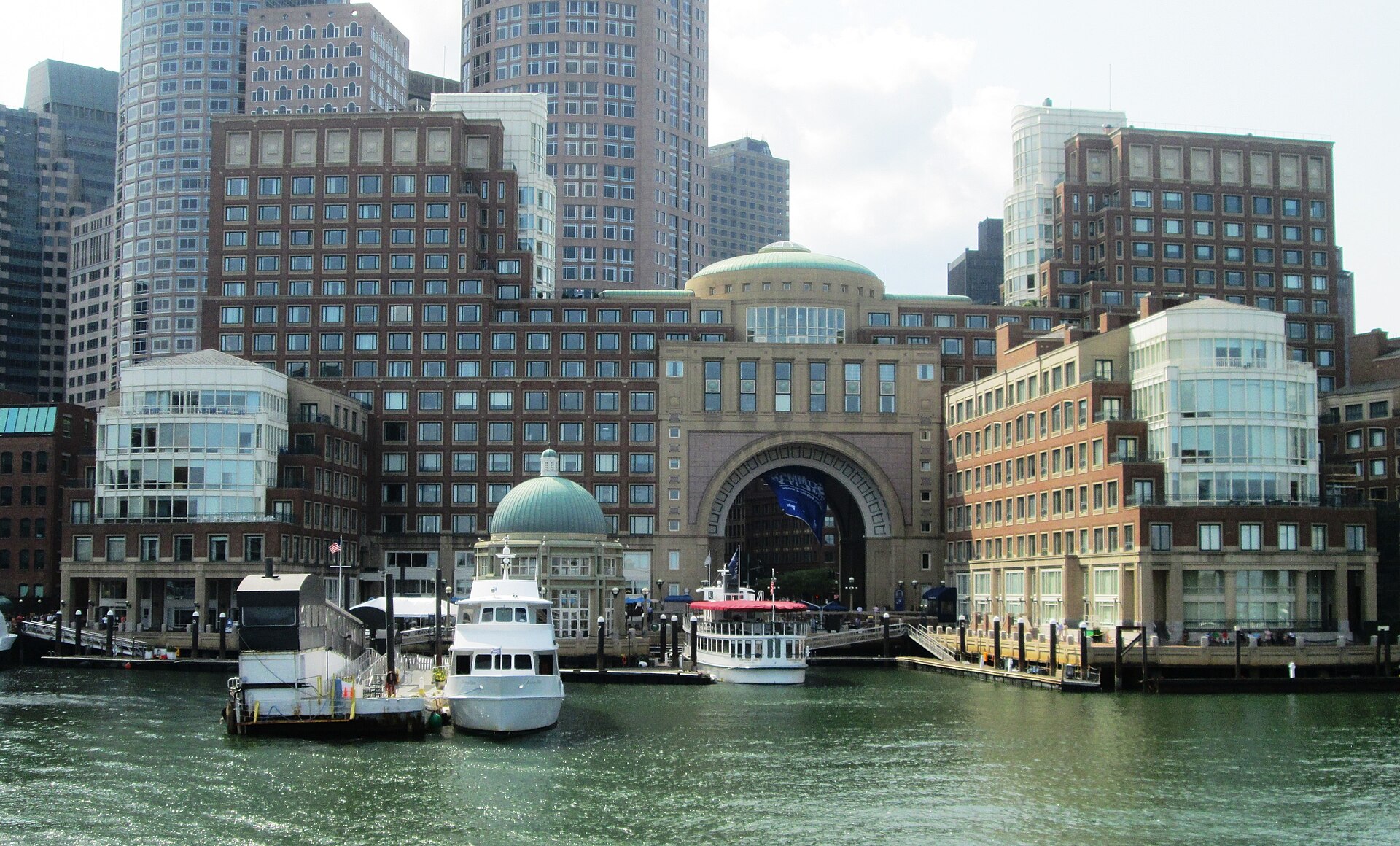
For Boston readers, the setting is the key advantage. You are in the middle of the central city, within an easy walk of Long Wharf, Rowes Wharf, Faneuil Hall, and the Greenway corridor. That makes the festival easy to pair with a harbor walk, a ferry arrival, or a same-day stop at Boston Public Market if you want to keep the food theme going before or after the event.
If you prefer a lighter crowd, the first hour is usually the safest bet for a more browse-friendly visit at events of this kind. If you are going mainly for demos or specialty vendors, build in extra time and expect the busiest stretch to be around midday.
Where exactly to enter
Because the event runs along the Greenway rather than inside one enclosed venue, your best entry point depends on what you want from the day. If you are arriving from the harbor side near Aquarium or Long Wharf, you can approach from the Waterfront edge and walk inward. If you are coming from Downtown or the Financial District, High Street is a useful landmark for the southern portion of the festival.
The posted festival areas include activity and demonstration zones near Rings Fountain, High Street, and Milk Street. That means families with younger kids may want to orient first toward the Rings Fountain section, while visitors focused on cooking programming may prefer to start closer to the posted demo areas.
Getting there on the T, on foot, or by ferry
Take public transportation if you can. The Greenway is one of the easiest event locations in Boston to reach without a car, and driving into the Downtown-Waterfront area on a Sunday festival day usually adds more hassle than convenience.
Nearby MBTA rapid-transit options typically include Haymarket for Orange and Green Line access, Aquarium for Blue Line access, and South Station for Red Line, commuter rail, and bus connections. The walk from those stations varies depending on which part of the festival you are targeting, so it is worth deciding whether you want the northern or southern end of the footprint before you head in.
Ferry riders also have a natural advantage here because the festival is close to the central waterfront. If you already use harbor service into Long Wharf or Rowes Wharf, the approach is easy and scenic, with no parking search required.
Walking and bike access are also practical. Downtown, the North End, the West End, and much of the Waterfront connect naturally to the Greenway corridor. If you are coming from farther neighborhoods such as Back Bay, the Seaport, or South Boston, public transit plus a short walk is usually the simplest combination.
What families should know
This is a genuinely family-usable festival rather than a food event aimed only at adults. The posted 2026 plan includes a Family Fun Zone near Rings Fountain running through the day, which should make it easier for households to break up the line-waiting and snacking with some play time.
Still, the site is an active downtown corridor, not a closed suburban fairground. Strollers are workable, but crowds can bunch around popular vendors and demonstration spaces. If you are bringing very young children, an early arrival will likely be more comfortable than the lunch rush.
Bathrooms, seating, and shade can all shape the experience at Greenway events. Since those details can vary by exact setup, it is smart to go in expecting a lot of standing and walking. Bring water, sun protection, and patience for lines.
Accessibility and practical logistics
The Greenway setting is generally one of the more accessible large-event locations in Boston because it is flat, central, and served by multiple transit approaches. But the festival footprint is long, so accessibility here is often more about endurance and pacing than about stairs.
If you want the easiest visit, pick one section of the festival first instead of trying to cover everything immediately. Meet-up plans also matter: choose a landmark in advance, since a half-mile event in Downtown Boston can feel surprisingly spread out once everyone is moving between vendors.
Mobile payment is widely useful at events like this, but do not assume every seller operates the same way. If a must-try vendor matters to you, have a backup payment option and expect occasional service slowdowns in a dense crowd.
What not to assume yet
The major 2026 facts are posted, but not every detail readers might want is fully built out far in advance. The organizer has already announced the date, location, hours, and several program elements, but some finer-grained lineup information may continue to change before September.
That means it is smart not to over-plan around one exact vendor, one demonstration, or one activity unless it is specifically posted in the current-year festival materials. Use the confirmed structure of the day, then leave room for discovery.
Why it matters in Boston
Boston has no shortage of food events, but this one stands out because it combines a central civic location with a New England-wide local food mission. It is not just a tasting event or a market run; it is designed to showcase regional producers, prepared foods, and the people behind them in a highly visible public setting.
In practical terms, that makes Boston Local Food Festival 2026 a strong pick for readers who want a food-focused Sunday without committing to a reservation, a single neighborhood crawl, or a ticketed indoor expo at a place like the Thomas M. Menino Convention & Exhibition Center. It is also a very different experience from a routine market stop at Boston Public Market or a quick meal hall visit at Time Out Market Boston: this is the city’s outdoorsy, late-summer, sample-and-stroll version of local food culture.
If you are planning ahead now, the durable move is simple: hold Sunday, September 20, 2026 on your calendar, aim for transit, wear shoes you can walk in, and expect a long linear festival on the Greenway rather than a compact one-block fair.