
Why SoWa First Friday Is Still Boston’s Most Practical Art Night
In the South End, SoWa First Friday remains one of Boston’s simplest ways to see working artists, browse galleries, and understand the city’s contemporary art scene without planning a full museum day.
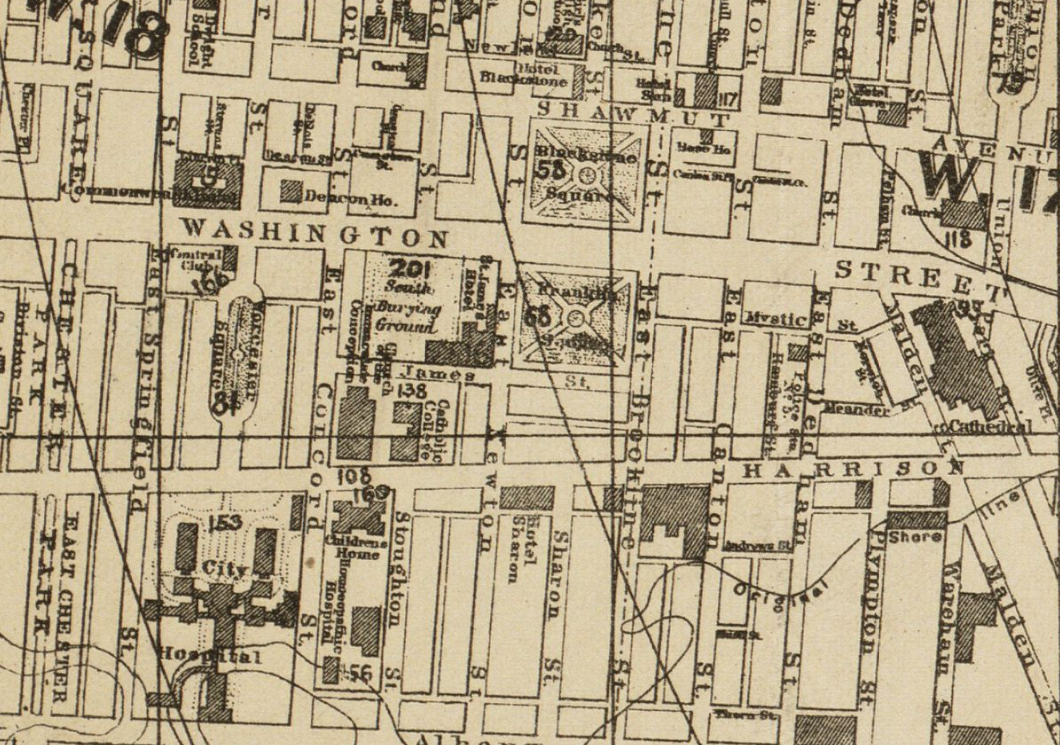
Boston has no shortage of major art institutions, but one of the city’s most useful recurring culture stories happens in former warehouse buildings on Harrison Avenue. On the first Friday of every month, the SoWa Art + Design District opens artist studios, galleries, shops, and showrooms to the public for an evening event called First Friday. For locals who want a reliable, low-friction way into Boston’s contemporary art scene, it is still one of the best routines in town.
That matters because SoWa offers something museums cannot fully replicate: the chance to see art where it is made, sold, discussed, and tested in real time. In a city where many visitors default to the Museum of Fine Arts, Boston or the Isabella Stewart Gardner Museum, SoWa gives a different but equally Boston-specific view of culture: artist-run, commercial, social, and rooted in the South End’s old industrial fabric.
What First Friday actually is
According to SoWa Boston, First Friday takes place every first Friday of the month from 5 p.m. to 9 p.m. During that window, the district’s artists, galleries, shops, and showrooms open their doors to the public. The event is described as free and family friendly, centered around the SoWa area at 450 and 460 Harrison, with additional district activity nearby.
That straightforward format is the reason it has staying power. You are not committing to a ticketed performance with one start time. You are not navigating a single blockbuster exhibition with a crowd funnel. You can arrive for 30 minutes, or make a full evening of it. In practical Boston terms, that flexibility is the point.
Why it matters in Boston’s arts ecosystem
SoWa’s value is not just that it is fun on a Friday night. It is one of the clearest public-facing windows into how Boston’s visual arts community functions outside large institutions. The district combines galleries with artist workspaces and design businesses, so visitors encounter finished exhibitions alongside the people and practices behind them.
That role fits into a larger Boston pattern. The Isabella Stewart Gardner Museum continues to invest in artists through residency, studio, and community programs, including an “In the Studio” series focused on artists who call Boston home. The museum also traces its own artist-residency legacy back to John Singer Sargent’s 1903 stay and studio work in the building. Seen together, the Gardner’s institutional support and SoWa’s open-door district model show two sides of the same city story: Boston’s art life depends not only on collections, but on living makers and active creative networks.
For readers trying to understand where Boston art feels most immediate right now, that distinction matters. A museum visit can tell you what the city values historically. A SoWa night can tell you what artists are making and showing in the present tense.
What to expect when you go
The best way to approach First Friday is to treat it as a walkable circuit rather than a single destination. Start with the studio buildings and galleries around Harrison Avenue, then follow whatever catches your eye. One room may be showing painting, the next photography, the next ceramics, design objects, or mixed-media work. Because the event is monthly and multi-venue, the experience changes more through turnover and conversation than through one headline attraction.
A few practical expectations help:
-
Expect a mix of gallery browsing and casual studio access rather than a formal guided program.
-
Expect to talk with artists, dealers, or staff; the event is built around open doors, not hushed museum etiquette.
-
Expect a social crowd, but not a single bottleneck. The district disperses visitors across multiple spaces.
-
Expect the area to work well as either a dedicated art outing or the first stop in a South End evening.
SoWa also notes food and beverage truck activity during First Friday, weather permitting, which helps explain why the event reads more like a neighborhood ritual than a one-off arts program.
How SoWa fits a Boston day
For locals, the smartest use of SoWa is often as a cultural counterweight to Boston’s more formal museum circuit. If you have recently done a long afternoon at the Museum of Fine Arts, Boston, or if you have out-of-town guests who already know the postcard version of Back Bay and the South End, First Friday adds the part of the city they are less likely to find on their own.
It is also a good answer to a familiar Boston problem: wanting culture without wanting an overplanned evening. Unlike a destination that requires advance timing and a fixed route, SoWa works for the in-between hours after work or before dinner. That makes it unusually durable as a local habit.
Visitors staying near Boston Common or the Boston Public Library — Central Library can think of it as a shift in perspective rather than a major expedition. You move from civic and institutional Boston to a district where the city’s creative economy is visible at street level.
The South End setting is part of the story
First Friday would not feel the same anywhere else. The South End’s rowhouse-and-warehouse mix gives SoWa its character: polished enough to welcome browsers, but still visibly shaped by workspaces and adaptive reuse. That setting helps explain why the event feels more grounded than generic “art walk” branding in other cities. It is tied to a real district with a long-established identity in Boston’s design and gallery world.
That is also why SoWa remains useful editorially as an evergreen Boston story. Even when individual exhibitions change, the core value remains stable: this is one of the city’s most accessible recurring entry points into contemporary visual culture.
Who should make time for it
SoWa First Friday is especially worth it for three groups of readers:
-
Boston locals who want a repeatable arts plan that does not require advance research.
-
Museum regulars who want to see living Boston artists and galleries in a less formal setting.
-
Visitors who have already done the landmark circuit and want a more current, neighborhood-scale version of Boston culture.
If you only make one adjustment, make it this: go with curiosity rather than a checklist. The best version of SoWa is not about seeing everything. It is about finding one artist, one room, or one conversation that reminds you Boston’s arts scene is not confined to institutions, however strong those institutions are.
That is why First Friday endures. It is practical, social, and specific to the city. In a Boston arts landscape anchored by places like the Isabella Stewart Gardner Museum and the Museum of Fine Arts, Boston, SoWa continues to do something indispensable: it lets the public walk directly into the working present of Boston art.